Lazy Jump
- 4.5
- Rating
- 10.00M
- Installs
- Free
- Price

 Analysis by App-foxy
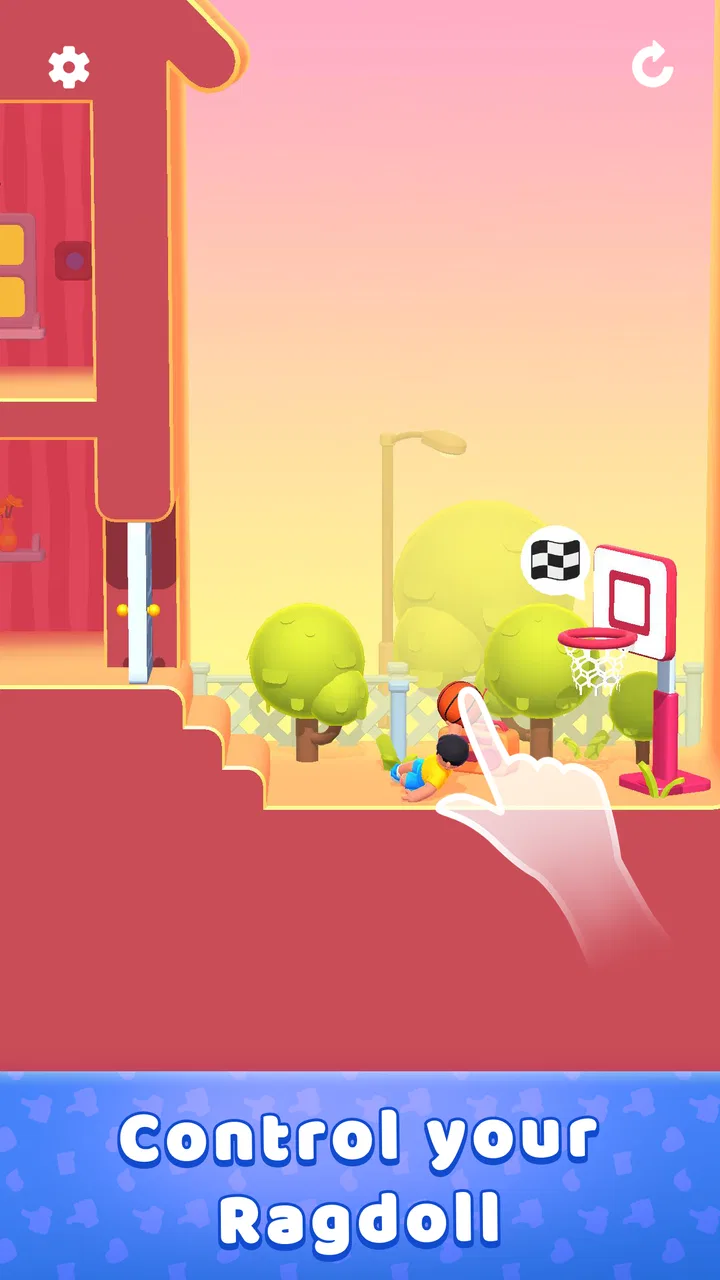
I picked up Lazy Jump expecting a quick arcade distraction, and that is exactly where it works best. It is a physics-driven game from SayGames Ltd in which I guide a loose, floppy character through obstacle-filled stages by timing taps and letting momentum do the rest. The appeal is immediate: there is no complicated story to learn, no long tutorial to endure, and no need to commit to a serious gaming session.
What makes it worth discussing beyond its simple premise is how well it fits shared, everyday use. I can hand the phone to someone else for a few minutes, watch them understand the basic idea almost instantly, and then take another turn without needing to explain an elaborate control scheme. At the same time, the game is not equally satisfying for everyone. Players who want precise platforming, deep progression, or a calm experience may find its intentionally awkward movement frustrating.
It is free to play, aimed at Everyone 10+, and sits in the arcade category. The store shows a 4.5 average from around 36 thousand ratings, with more than 10 million installs, so it has clearly found a broad audience. Those figures suggest accessibility, but my own impression is more specific: this is best treated as a short-session game for comic failures, quick retries, and informal competition rather than as a main game demanding sustained attention.
You May Also Like

 Blood Strike: 2.5 Anniversary
Blood Strike’s Loadouts Turn Every Drop Into a Tactical Gamble
A close look at Blood Strike’s custom loadouts: how fast access to signature weapons reshapes its battle royale rhythm, rewards preparation, and narrows the gap between fights.

 Pandora - Music & Podcasts
Pandora’s Music Is Easy to Start, but Harder to Recover
Pandora’s strength is its low-effort path from a seed to a station. Its weak spot is how much confidence it asks you to place in connection, setup, and quiet recovery.

 8 Ball Pool
 Is Built on Rivalries, Rematches, and Routine
A close look at the rivalries, rematches, shared routines, and unanswered safety questions that turn a quick pool match into a persistent mobile community.

 Samsung Music
’s Quiet Strength Is Playing What You Already Own
Its reach comes less from spectacle than from dependable access to a personal library. That simplicity is both the app’s strongest retention engine and its ceiling.

 AccuWeather: Weather Radar
AccuWeather Review: A Quick, Clear Forecast for Everyday Decisions
For everyday plans, the best forecast is the one you can understand quickly. AccuWeather makes rain timing, radar, and local conditions easy to act on, with a few trade-offs.

 Hill Climb Racing
Why Hill Climb Racing Still Turns Crashes Into One More Run
A tiny car, a bumpy hill and one more upgrade: Hill Climb Racing keeps resurfacing because its simple chaos makes every near-miss feel personal.
More From Our News Desk



How Lazy Jump works when several people share a device
The strongest household use case is a spare-minute handoff. Imagine waiting for food, sitting in a living room while somebody else chooses a film, or passing time during a short break. One person plays a stage, fails in an amusing way, and passes the device over. The next person does not need to remember a complicated combination of buttons or study a map. That low barrier is a real advantage when the game is being used socially rather than privately.
The character’s floppy movement creates much of the humor. A tap can send the rag doll into an awkward leap, and the result often depends on how the body lands rather than on a perfectly controlled animation. I found that the funniest moments were not necessarily successful ones. A near miss, a strange bounce, or a badly timed launch can make a short attempt entertaining even when progress is poor.
That also explains why the game works differently from a conventional precision platformer. In a typical arcade alternative, I expect the character to respond cleanly and consistently to every input. Here, the challenge comes from reading the situation and accepting that movement has a loose, physical quality. I am not simply steering a character from point A to point B; I am trying to create a useful trajectory and then react to what the body does.
For a shared device, I would establish a simple turn-taking habit before starting. Each person can play until reaching a natural failure, then pass the phone immediately rather than restarting repeatedly in search of a perfect run. This keeps the game from becoming dominated by the most persistent player. It also makes the experience more suitable for mixed skill levels, because a younger or less experienced player still gets regular turns instead of watching someone else grind through the same section.
One practical tip is to avoid holding the device in a way that hides the play area from the next person. Because the action is visual and timing-based, spectators can learn by watching a single attempt. That makes Lazy Jump unusually easy to coordinate in a room. I often find that people who are not normally interested in games will still comment on a failed landing or suggest when to tap.
Why the simple controls are both a strength and a weakness
The controls are approachable, but approachable does not mean effortless. The game’s loose physics can make an input feel less direct than it would in a standard runner or platform game. If I want a character to stop exactly where I expect, Lazy Jump may feel imprecise. The same quality that produces funny motion can also make a failed attempt feel like the game, rather than I, decided the outcome.
I learned to treat each attempt as a small experiment. Instead of tapping repeatedly whenever the character looks unstable, I watch the body’s angle, the nearby surface, and the direction of travel. A delayed input can sometimes be more useful than an immediate correction. This is one of the less obvious skills the game rewards: patience matters, even though the overall presentation feels silly and fast.
That approach is particularly useful when a child is playing alongside an adult. Rather than taking the phone and demonstrating the “correct” move, I would describe what to watch for and let the player test it. The game becomes a conversation about timing and prediction instead of a contest where the more experienced person simply takes over. It is a small distinction, but it makes shared play more welcoming.
There is a trade-off here. Players who enjoy mastering exact patterns may eventually want more control than this style provides. Players who enjoy unpredictable outcomes may appreciate the same stages for longer because the rag doll does not always behave in an identical-looking way. I would choose a traditional platformer for deliberate, highly precise practice, but Lazy Jump for a lighter session where surprise is part of the entertainment.
Setting boundaries before the first shared session
Because the game is free, it is easy to install and start without much preparation. That convenience is helpful on a family or shared device, but I would still set expectations before handing it over. The game includes in-app purchases priced at $2.99 per item, so anyone using a device connected to a payment method should understand that optional purchases are not part of the basic requirement to play.
I would make the boundary clear in plain language: try the free game first, and do not approve a purchase during a turn. This is not a criticism of the core experience; it is simply sensible household coordination. A player who is absorbed in a difficult stage may be tempted to treat an offered item as the obvious solution, while another person may not realize that tapping through a purchase flow has consequences.
The useful distinction is between access and spending. The game is free to download and play, but that does not mean every part of the surrounding experience should be treated as consequence-free. On a shared phone or tablet, the person who owns the account should remain the one who decides whether any optional item is wanted. That keeps a five-minute arcade session from turning into an avoidable disagreement.
I would also decide whose progress is being used. If several people take turns on one device, they are naturally contributing to the same local play experience rather than maintaining clearly separate personal runs. That can be fun if everyone accepts it, but it can also cause friction when one player wants to experiment and another wants to protect progress. A simple rule helps: either treat the game as a communal challenge, or let each person have a defined turn without claiming ownership of the whole run.
This is where Lazy Jump differs from a more account-oriented game. If personal records, separate profiles, or carefully protected progression are central to your household, a game designed around individual accounts may be a better fit. I would not install Lazy Jump on a shared device expecting it to manage family identities for me. Its value is in immediate play, not in elaborate separation between users.
Coordinating play without turning it into a competition
The game naturally invites comparison because each attempt is easy to observe. Someone will want to beat the previous result, and that can add energy to the room. Still, I think the healthiest way to use it with different ages or skill levels is to vary the goal. One player can focus on reaching a new section, another can try to land more safely, and a third can simply attempt a stage without help.
This avoids making success depend only on who has the quickest reactions. A younger player may enjoy discovering how the rag doll moves, while an adult may be more interested in finding a reliable timing window. Both are legitimate ways to play. If the strongest player always takes over at the first difficult obstacle, the shared experience becomes a demonstration rather than a game.
A useful coordination trick is to let the person who is currently playing describe the next action before making it. Saying “I am waiting for the body to rotate” or “I am aiming for the lower surface” slows the session just enough for others to understand the decision. It also reveals whether a failure came from a rushed tap, a misunderstood obstacle, or the unpredictable movement itself.
For short gatherings, I would use a fixed number of attempts rather than an open-ended challenge. That prevents one player from consuming the whole session through repeated retries. It also makes the game easier to fit around ordinary household routines. When the timer is informal and the turns are brief, Lazy Jump remains a social diversion instead of becoming another source of screen-time negotiation.
On the other hand, I would skip shared play if the group dislikes watching failed attempts. The game’s humor depends heavily on awkward movement and repetition, and that can wear thin for someone who wants constant forward progress. In that setting, a cooperative game with shared objectives or a competitive title with clearer rules may create less friction.
Age context and trust on a family device
The Everyone 10+ rating gives parents and guardians a useful starting point, but an age label is not a substitute for knowing the player. The main question in my view is not whether the controls are difficult; they are easy to understand. It is whether the player is comfortable with repeated failure, comic physical movement, and the temptation to keep trying after a frustrating attempt.
For an older child, the game can be a harmless way to practice patience and timing. I would encourage short sessions and explain that the rag doll’s clumsy behavior is part of the design, not evidence that every mistake was caused by poor play. That framing matters because the game can sometimes feel unfair when a landing unfolds differently from what the player expected.
For a younger child, I would play the first session together. That gives me a chance to see whether the movement is amusing or irritating, and it creates a natural moment to explain the purchase boundary. I would not assume that a simple arcade game needs no supervision simply because it has a straightforward premise. Shared attention is especially useful when a device already contains other apps, accounts, or payment options.
Trust also means being clear about what counts as a turn. If a child is allowed to play independently, I would avoid silently changing settings or taking over progress afterward. If the device belongs to several people, everyone should know whether the game is being used casually or whether somebody is trying to achieve a personal target. Clear expectations reduce arguments more effectively than trying to recover from them later.
The game is less suitable for someone who becomes distressed by unpredictable controls or repeated retries. In that case, a slower puzzle game may be a better choice because the player can reason through a move without the same physical uncertainty. Lazy Jump is at its best when failure can be laughed off and the next attempt feels inviting rather than compulsory.
What the current version means for choosing it now
The current version is 1.10.6, and the game supports devices running at least OS 9. That makes it relevant for people using older compatible hardware rather than only the newest phone or tablet. Even so, I would judge the experience on the actual shared device, especially if it has a small screen or if several people need to see the action at once.
A larger screen helps with group viewing because the important information is visual: the character’s position, the nearby surfaces, and the timing of movement. A small phone is perfectly workable for one player, but spectators may need to lean in, which can make turn-taking less comfortable. If the household plans to use it as a living-room diversion, the screen size may matter more than raw performance.
I also recommend checking the device before a child begins a session. Make sure the right person is holding it, the battery is sufficient for the intended break, and the owner has already decided how optional purchases will be handled. These are ordinary preparations, but they prevent the game’s fast, impulsive rhythm from setting the household rules for you.
There is no need to treat Lazy Jump as a long-term commitment. Its free entry point makes it easy to test whether the physics appeal to your group. Give it a handful of turns, observe whether people enjoy discussing the next move, and notice whether the humor survives repeated failure. If it does, the game has earned a place in a casual rotation. If it does not, uninstalling it is a reasonable conclusion rather than a missed opportunity.
Where it stands beside other arcade choices
Compared with an endless runner, Lazy Jump asks for less constant steering but more acceptance of momentum and awkward landings. A runner usually rewards maintaining a clean rhythm while avoiding obvious hazards. Here, the rhythm is less dependable, and the challenge is closer to shaping a launch and adapting to the result. I prefer the runner format when I want a focused reflex workout; I prefer this one when I want unpredictable comedy.
Compared with a precision platformer, it offers less exact control and less satisfaction from repeating a sequence perfectly. The reward is not always the feeling of flawless execution. Sometimes it is discovering that a strange angle or delayed tap unexpectedly works. That makes it more approachable for casual players, but less attractive to anyone who wants every mistake to have a clearly measurable cause.
Compared with a puzzle arcade game, it provides fewer reasons to stop and plan several moves ahead. Its thinking is immediate and physical rather than analytical. I would choose a puzzle alternative for a quiet commute or a player who enjoys deliberate problem-solving. I would choose Lazy Jump for a group that wants to react, laugh, and pass the phone around without explaining a complicated ruleset.
The developer, SayGames Ltd, has positioned the experience as a compact arcade game rather than a demanding simulation, and that distinction matches my use of it. I would not recommend it as the only game on a device for a serious player. I would recommend it as the title you open when everyone has a few minutes and nobody wants to invest in a story, a tutorial, or a complicated multiplayer setup.
My household verdict after using it
Lazy Jump is most convincing as a shared, low-pressure arcade toy. Its loose rag-doll movement gives every turn a little uncertainty, while the simple premise lets new players join almost immediately. I can imagine keeping it available on a family tablet for short handoffs, especially when the goal is conversation and amusement rather than deep progression.
I would set two boundaries from the start: optional purchases remain the account owner’s decision, and turns should be short enough that one person cannot dominate the device. I would also introduce it to children with the Everyone 10+ context in mind, watching how they respond to repeated failure instead of assuming the rating answers every question about suitability.
For me, the decisive strength is the way the game turns imperfect control into entertainment. The decisive weakness is the same thing: if you want dependable precision, its physics may feel irritating. That makes the recommendation straightforward. Choose it for quick attempts, shared laughter, and a game that can be understood in moments. Skip it in favor of a more controlled platformer or a deeper arcade title if mastery, personal progression, or carefully separated accounts matter more than spontaneous fun.
As a free arcade game, it is easy to try without making it the center of your gaming routine. I would install it for a household that enjoys passing a device around and treating failure lightly. I would not insist on it for someone who needs every input to produce a predictable result. After using it, my honest view is that its value comes less from how far I get and more from how quickly it creates a shared moment.
FAQs for Lazy Jump
01What is Lazy Jump and how does it work?
Lazy Jump is a dynamic puzzle game available on both Android and iOS platforms. Players guide a character through various levels by solving physics-based puzzles. The game challenges your strategic thinking as you navigate obstacles and use tools to help the character reach the target. Each level offers unique challenges that test your problem-solving skills.
02Is Lazy Jump suitable for all age groups?
Lazy Jump is designed to be accessible to players of all ages. Its simple controls and straightforward gameplay make it easy for younger players to enjoy, while the increasing difficulty of puzzles provides a challenging experience for adults. Parents can feel comfortable letting their children play due to its non-violent and family-friendly content.
03Does Lazy Jump require an internet connection to play?
No, Lazy Jump can be played offline. Once downloaded, the game does not require an internet connection, allowing players to enjoy it anytime and anywhere. However, an internet connection may be needed for downloading updates or accessing certain features, such as leaderboards or in-app purchases.
04Are there any in-app purchases in Lazy Jump?
Yes, Lazy Jump includes optional in-app purchases. While the game itself is free to download and play, players can choose to purchase additional hints, remove ads, or unlock special features. These purchases are not necessary to complete the game but can enhance the overall gaming experience.
05What are the system requirements for Lazy Jump?
Lazy Jump is designed to run smoothly on most modern Android and iOS devices. For Android users, a device running Android 5.0 (Lollipop) or higher is recommended. iOS users should have a device with iOS 10.0 or later. Ensure you have sufficient storage space for the app and any additional content.
Pros
- Engaging physics-based puzzles.
- Simple controls for easy play.
- Charming
- minimalist graphics.
- Regular updates with new levels.
- No intrusive ads during gameplay.
Cons
- Limited character customization options.
- Can become repetitive over time.
- Some levels feel too easy.
- Occasional minor bugs.
- Requires internet for leaderboard access.

Lazy Jump
Gallery